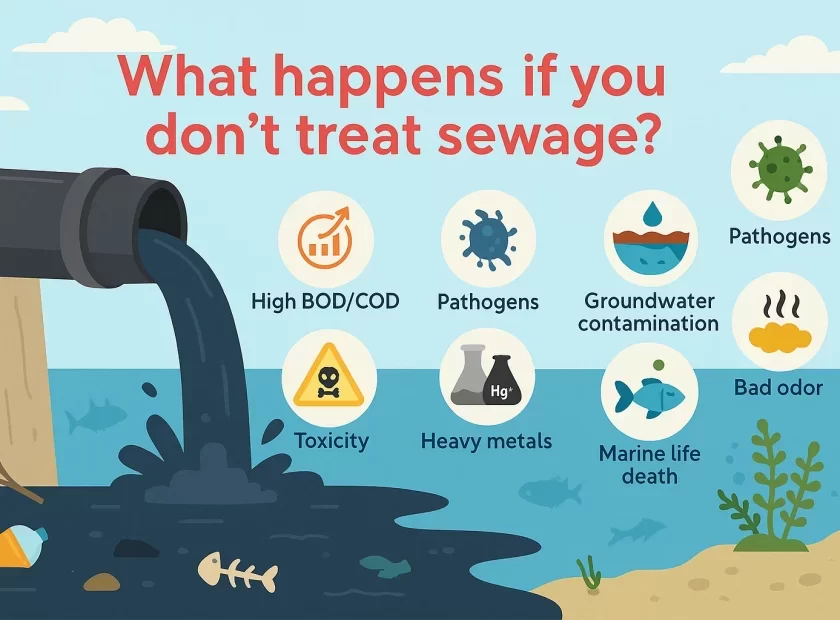



Industries such as textiles, chemicals, pharmaceuticals, food processing, metal finishing, and many others generate wastewater that contains chemicals, toxins, colours, oils, heavy metals, and harmful organic pollutants. If this industrial wastewater is discharged without treatment, it can contaminate soil, groundwater, and surface water — causing irreversible environmental damage.
To prevent this, every industry is required to install an Effluent Treatment Plant (ETP).
An ETP ensures that industrial wastewater is treated scientifically so that harmful contaminants are removed before the water is safely disposed of or reused.
Let’s break down what an ETP is and how the entire treatment process works.
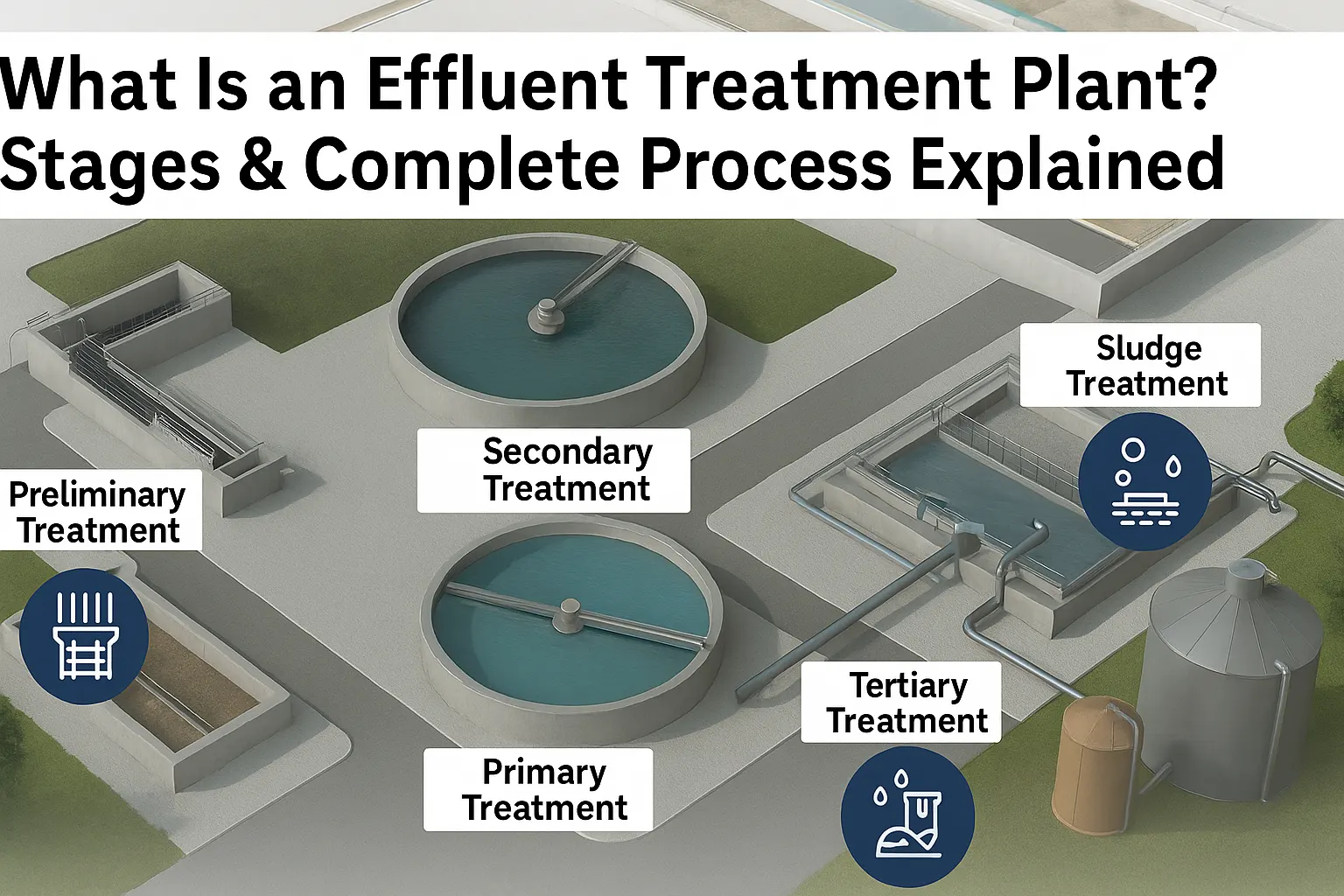
What Is an Effluent Treatment Plant (ETP)?
An Effluent Treatment Plant is a specialized system used to treat industrial wastewater (effluent) and remove:
- Toxic chemicals
- Suspended solids
- Heavy metals
- Oils & grease
- Colour
- Organic pollutants (BOD/COD)
- Pathogens
The main purpose of an ETP is to make wastewater safe, compliant with CPCB/SPCB norms, and suitable for either discharge or reuse within the facility.
Modern ETPs use technologies such as:
- Physico-chemical treatment
- Biological treatment (MBBR/SBR/ASP)
- Advanced filtration (UF/RO)
- Zero Liquid Discharge (ZLD) systems
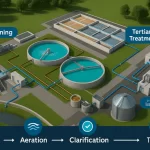
Stages of the Effluent Treatment Process
Industrial wastewater varies widely, so the treatment process is designed based on the type of industry. Here are the standard stages found in most ETP systems:
- Preliminary Treatment – Removing Large Contaminants
This stage protects downstream equipment by removing big and bulky materials.
Processes include:
- Screening (removal of plastics, rags, debris)
- Grit removal (sand, silt, gravel)
- Oil & grease traps or skimmers
This step ensures smoother operation of the entire ETP.
- Equalization – Balancing Flow & Quality
Industrial effluent has fluctuating pH and pollutant load.
The equalization tank stabilizes:
- Flow rate
- pH level
- Temperature
- Concentration of pollutants
It ensures steady and uniform treatment quality.
- pH Correction – Neutralizing the Wastewater
Most effluent is either highly acidic or alkaline.
Chemicals such as lime, caustic, or acids are added to adjust pH to the desired range (usually 6.5–8.5).
Correct pH is essential for chemical reactions and biological treatment.
- Coagulation & Flocculation – Removing Suspended Impurities
This is a key physico-chemical process.
Coagulants (like alum, PAC, ferric chloride) break tiny particles.
Flocculants (polymers) bind them into bigger clumps.
These clumps settle easily and remove:
- Colour
- Turbidity
- Heavy metals
- Fine suspended solids
- Primary Clarification – Settling of Solids
The chemically treated water enters a primary clarifier, where:
- Sludge settles at the bottom
- Clear water overflows
This removes a major portion of solids and pollutants before biological treatment.
- Secondary Treatment – Biological Treatment of Organic Load
This stage removes dissolved organic pollutants (BOD/COD).
Technologies used include:
- MBBR (Moving Bed Biofilm Reactor)
- SBR (Sequencing Batch Reactor)
- ASP (Activated Sludge Process)
How it works:
Microorganisms break down organic pollutants in an aerated environment, converting toxins into harmless by-products.
This stage removes 70–90% of organic pollution.
- Secondary Clarification – Settling of Biomass
After biological treatment, water flows into a secondary clarifier, where:
- Biomass (activated sludge) settles
- Clear water moves to tertiary treatment
- Excess sludge is separated for disposal
- Tertiary Treatment – Advanced Purification
This final polishing step ensures the treated water meets strict discharge norms.
Processes include:
- Sand filtration (PSF)
- Activated carbon filtration (ACF)
- Ultrafiltration (UF)
- Reverse osmosis (RO) for high-quality reuse
- Activated carbon for colour & chemical removal
Tertiary treatment ensures crystal-clear, high-quality water.
- Disinfection – Eliminating Harmful Microorganisms
Final disinfection is done using:
- Chlorine
- UV
- Ozone
This ensures water is safe for discharge or reuse.
- Sludge Management – Handling Solid Waste
All the sludge collected from clarifiers is treated using:
- Filter press
- Sludge drying beds
- Centrifuge
- Digestion
- Composting
Proper sludge handling prevents secondary pollution.
Why Industries Must Have an ETP
A well-designed effluent treatment plant ensures:
- Compliance with CPCB/SPCB/NGT norms
- Avoidance of legal penalties and closure notices
- Protection of water bodies and groundwater
- Removal of toxic chemicals and heavy metals
- Safe reuse of water for utilities
- Reduced freshwater consumption
ETPs are not just a regulatory requirement — they are essential for safe industrial operations.
Need an ETP or Want to Upgrade an Old One?
Venza provides complete ETP solutions, including design, supply, installation, and upgradation using:
- MBBR
- SBR
- UF/RO
- ZLD systems
Our experts ensure your plant complies with norms and operates efficiently.
For any assistance or related queries:
📞 Call: +91-9999724878
📧 Email: enquiry@venzawater.com
We’ll help you build an efficient, compliant, and future-ready effluent treatment system.