


Sewage water often feels like something out of sight, out of mind… until it becomes a problem too big to ignore. When wastewater from homes, buildings, hospitals, hotels, and industries isn’t treated properly, the impact spreads much further than we imagine. It affects our health, our environment, our economy, and even our future water security.
Whether you’re a facility owner, a builder, an industry operator, or a policymaker — understanding what happens when sewage water is not treated is the first step toward taking action.
Let’s break it down in a simple, real-world way.

- Water Bodies Become Highly Polluted
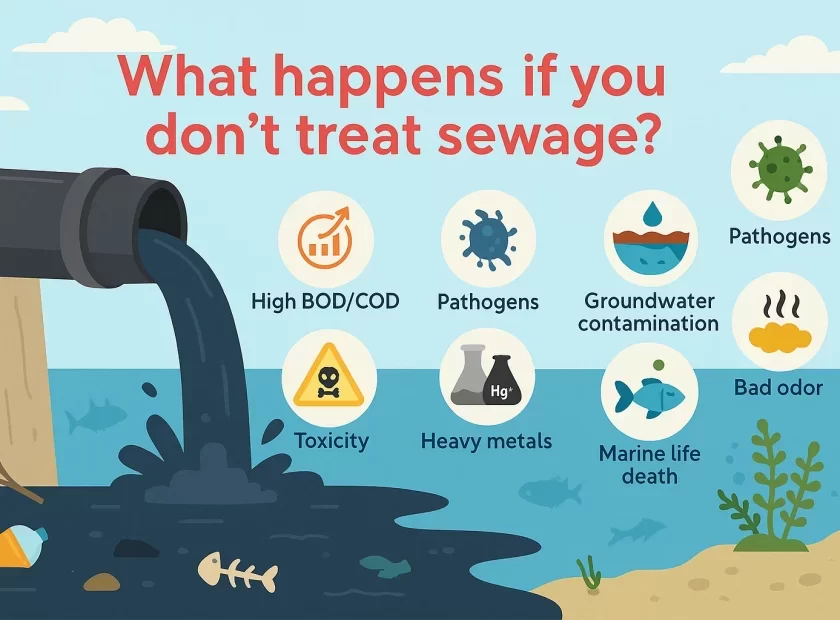
Untreated sewage directly enters rivers, lakes, and groundwater, leading to:
- Extremely high BOD & COD levels
- Reduced oxygen in water
- Floating sludge and foul smell
- Toxic algae growth
- Death of aquatic life
This is why many rivers passing through cities suffer from foam, discoloration, and dead zones where no life can survive.
- Major Public Health Risks
This is the biggest consequence — and the most dangerous.
Untreated sewage leads to diseases like:
- Cholera
- Typhoid
- Dysentery
- Hepatitis A & E
- Skin infections
- Gastrointestinal illnesses
Contaminated water becomes a breeding ground for harmful pathogens, affecting entire communities.
- Groundwater Contamination
Sewage seeps into the soil and eventually mixes with groundwater — the same source many cities rely on for drinking water.
This contamination is extremely hard to reverse and can last decades.
- Severe Environmental Damage
Failing to treat sewage causes long-term ecological harm:
- Destruction of aquatic ecosystems
- Damage to soil fertility
- Loss of biodiversity
- Toxic buildup in plants and animals
The environment simply cannot handle untreated organic and chemical pollution.
- Legal Penalties & Compliance Issues
Indian regulations by CPCB, SPCBs, NGT, and municipal bodies are getting stricter each year.
Non-compliance can result in:
- Closure notices
- Heavy environmental compensation
- Cancellation of NOC/Consent to Operate (CTO)
- Criminal liability in extreme cases
For builders and industries, this can stop projects and cause massive financial loss.
- Foul Odour & Poor Living Conditions
Untreated sewage creates unavoidable nuisances:
- Persistent bad smell
- Mosquito breeding
- Sludge accumulation
- Overflow during rains
- Dirty surroundings
This affects residents, workers, and customers — harming reputation and property value.
- Wastage of a Valuable Resource
Treated sewage water can be reused for:
- Flushing
- Gardening
- Cooling towers
- Construction
- Landscaping
Without treatment, this recyclable water is lost — increasing the burden on freshwater sources. In a water-scarce country like India, this is a huge missed opportunity.
- Higher Costs in the Long Run
Many believe installing an STP is expensive — but not treating sewage costs far more, such as:
- Fines
- Water tanker expenses
- Environmental damage
- System failures
- Complaints from authorities
- High O&M challenges due to poor planning
A well-designed STP saves money, water, and stress.
Why Sewage Treatment Plants (STPs) Are Essential
A modern STP ensures:
- Removal of pollutants
- Compliance with CPCB norms
- Safe discharge or reuse
- Protection of water bodies
- Health and environmental safety
- Long-term sustainability
Technologies like MBBR, MBR, SBR, and Hybrid systems make treatment efficient, compact, and cost-effective.
Get Expert Guidance for Your Sewage Treatment Needs
If you’re planning a new STP or need to upgrade/repair an existing one, you don’t have to figure it out alone.
Do you need advice or assistance in selecting the best sewage or wastewater treatment system for your building, industry, or institution?
Venza provides engineered solutions that eliminate wastewater challenges efficiently and reliably.
For any assistance or related queries:
📞 Call: +91-9999724878
📧 Email: enquiry@venzawater.com
Our experts will ensure your sewage problems go away — with the right engineering, the first time.